Monday, June 30, 2014

Heteronorma-wha?

This week the concept of heteronormativity stood out to me. 

Heteronormativity is the assumption that everyone falls into specific genders and gender roles in life, particularly gender being men and women, and gender roles being masculine and feminine.  Heteronormativity also assumes that heterosexuality is normal, and anything not heterosexual (lesbian, gay, bisexual, transgendered, etc.) is deviant.  The concept of sex and gender being misaligned is also considered deviant in heteronormativity, leaving the power in the hands of heterosexual, cis-gendered individuals.

To me, heteronormativity sounds like the patriarchy of straight people.  I'm sure I could word that more eloquently, but there it is.  Where patriarchy is the male power in a society dictating the power women can and cannot hold, heteronormativity is the heterosexual power in a society stating that logically, queers can't exist.

The biggest difference I see between the patriarchy and heteronormativity is that heteronormativity is being smashed, at a very pleasing rate.  When I reflect back on the past five years of the fair representation of anything non-heteronormative in the media, the change is shocking.  The queer community is beginning to be represented as normal functioning members of society rather than psychotic, sex obsessed, diseased or flamboyant comedic relief sources.  When I reflect on women in the media in the last five years, I don't see as drastic a change.  While there have been improvements for the representation of women in the media, the difference is not as drastic or noticeable as with the queer community in the media.


{Mitchel and Cameron introduce their adopted daughter Lily in the pilot episode of Modern Family}


There's even an entire Wiki dedicated to queer individuals in every form of media imaginable.  So it's got to be getting better, right?

http://en.wikipedia.org/wiki/Lists_of_television_programs_with_LGBT_characters

Yes and no.

While the queer community is being portrayed more regularly in the media, they're still "hetro-washed," and made the least threatening as possible to hetero-normative viewers.

We discussed the same concepts a few weeks ago with The Mary Tyler Moore Show.  While there we huge steps taken with Mary's character, she still was ultimately subservient to the patriarchy. 

My biggest fear of heteronormativity in the media is that the queer representation present now will begin to plateau.  Now that gay, lesbian, bisexual and transgendered individuals are in our television shows and movies, will that placate the media for a while, and will the just remain as "kinda liberating characters, if you don't dig to deeply," the way that so many female characters have been set up.

I hope not.  The only way to really tell is to be active in our media consumption.  Bringing us full circle this semester, we can affect the bottom line.  If there's a show or movie that portrays the queer community negatively or as a joke, we have the power to both disengage from that particular form of media as well as engage ourselves through social media to let our voices be heard that "Hey, this is really not alright."


On the flip side, we can also support the media that helps break down heteronormativty by continuing to consume that media, and encouraging others to engage in it as well.


It's a long road ahead, but this class has made me so hopeful in where feminism and equal rights are taking us.


Thanks for a great class everyone.


Sarah out.


Word count;  560

Show Me Your Weenis

Heteronormativity...  That is something I had honestly never heard of until this last week.  But that would make sense right?  To me as a straight male, my perspective would be normal to me.  But what about the people who may not share the same views, values, or lifestyle as me?  I never really put myself in their shoes.

Heteronormativity is how culture forces a lens on life saying that Heterosexuality is the control of what is considered normal.  It says that anything that is not hetero is an abnormality.  We as a society have been programmed to think in this way.

It is everywhere in our society.  You can see it in the media, and you can see it in our everyday lives.  It can be when asking someone about their significant other and automatically assuming it is the opposite gender, to seeing it on an episode of your favorite tv show, where a straight couple can readily display public affection, but not gay couples.

In my clip above is an old show called "Mr. Show," starring David Cross and Bob Odenkirk.  We see a 80's hairband confronted with a party tape they made.  Within the tape the band members partake in homosexual acts, but do not think of them as "Gay".  Instead they think they are just partying.  But when their manager tells them that what they are doing is what society considers "Gay," they are all disgusted, until their managers find a way to spin this by appealing to the "Gay" crowd.

When we unpack this situation, we can see Heteronormativity at play here.  Just the mere fact that the managers would be worried about homosexual acts, shows that it is not the norm, but something that society frowns upon.  Next, when the band members are told that what they are doing is gay, we see them act disgusted, this happens because society deems this act as deviant and not normal.

Although this is a skit, the reality of the negative attention given to someone because of heteronormativity is all too likely.  People wouldn't care about the heavy drug use, people wouldn't care about wreck-less partying, no, they would only care about someone else's sexuality.

Hopefully we as the human race can get over this, but until we quit looking at sexuality and gender in binary, we are only going to be pissing in the wind.

Class has been fun, and since this is extra credit and I am on vacation I think I am done!  Hope you guys have a good rest of the summer, and don't forget to stay safe!

Word Count: 437

Monday, June 23, 2014

It's all a point of view.

This week’s class became devoted to watching activists engage in behavior that could be considered far outside “the norm.”  First we watched a short documentary on Femen, a European women’s rights extremist group (Femen refers to themselves as “sextremist”) who fights three particular forms of the patriarchy; the sexual exploitation of women, dictatorship, and religion.  Femen fights these forms of the patriarchy by staging highly public and highly visible protests in the nude or while topless.  


We also watched a foreign documentary called “Mutantes:  Punk, Porn, Feminism” that looks deeply into non-traditional pornography, particularly the punk porn genre.  Essentially, the film shows the alternative forms of pornography that occur when a cis-male is not involved.  Much of the documentary shows explicit clips from this genre, and discusses how while many find these types of sexual behaviors bizarre or even wrong, for the people involved in the punk porn genre, they feel liberated and empowered.


One of the articles we read in class was “Unruly Arguments:  The Body Rhetoric of Earth First!, Act Up, and Queer Nation,” by Kevin Michael DeLuca.  The article discusses how these three organizations reach beyond the “normal” way of staging a protest to include protesting with their bodies in an unorthodox way, such as tying themselves to a tree, staging a “die in” on a major city street, or staging a “kiss in” at a hyper-heterosexual area such as a mall.  These events, as Kevin DeLuca describes it, help deconstruct the reality that the general public knows, accepts, and is familiar with, but also leave space for people to begin to comprehend there may be a different way to live, there may be an alternative to the social reality we know.

By individuals in these “extreme” groups using their bodies in this unorthodox way, it draws the public’s attention.  The attention may not cause the public to sympathize with the groups’ cause, but it does get the public not just aware of the issue, but talking about the issue.  

Groups like Femen and the punk post-porn genre use the same tools: they proudly display their views, feel empowered by them, and begin to chip away at mainstream public perception.

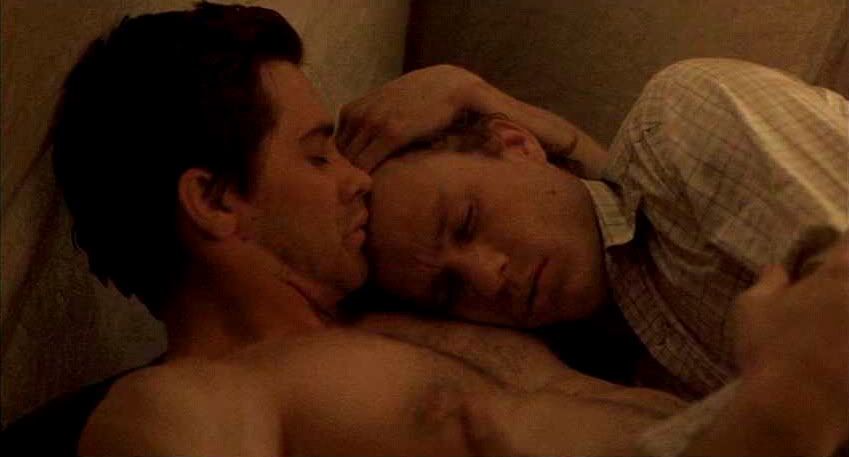
Another example of this (although far more mainstream than Femen and “Mutantes” is the 2005 film “Brokeback Mountain,” starring Heath Ledger and Jake Gyllanhaal.  This was one of the first mainstream, major motion pictures about a gay couple.  Not only that, but the two gay characters in the film not used as comedic relief or as a caricature.  The story, plot line, characters and themes were all strongly written, and the characters themselves were relatable to the average heterosexual viewer. I was 14 when the film came out, and reflecting back it was one of the factors that helped push me into the queer community and the person I am today.  


I had grown up in a very small, conservative town.  My parents had never really discussed homosexuality with me, so the only discussions I had about the queer community were the typical small town, small minded hatefulness speeches of “being gay is a sin you‘ll burn for,” and “they’ll turn you into a queer yourself,” and “they’re ruining our society.”  I wouldn’t necessarily repeat these words, but at a young age in this community, it quickly became ingrained in my mind that gays were “bad.”  They weren’t like us, they should be accepted, or around us if it can be helped.   Without an outlet for discussion or an option to consider an alternative point of view, I blindly accepted the views of those around me as true.

I watched the film with my best friend, specifically after being told not to by both of our parents.  The film deeply unsettled me.  These were two characters in a small town I could relate to.  They weren’t hurting anyone, they just wanted to be in love.  Ultimately, it left one dead and the other a broken man.  I struggled to process what I’d encountered in the film.  

A few days later, my best friend opened up to me and told me he was gay.  Again, I struggled.  All the small minded views I had accepted as true about gay people came crashing down around me.  My best friend was one of the best people I knew.  Could he really be such a good person but be damned to hell for being gay?  He’d never tried to make me gay, or any of our other friends gay either.  
The pressure started to get to me.  I eventually confessed to my mother everything that had happened.  She asked me what I thought about gay people, and I repeated everything I had heard around me.  Her face fell as I spoke.  “Do you really believe those things?”  I realized I didn’t.  “He’s always been gay, the only thing that’s changed is your knowledge of that fact.  He’s the same person he’s always been and who he’ll always be.”

In the course of a few days, a huge portion of the reality I knew had changed.  Without something considered extreme, in this case “Brokeback Mountain,” my perception of reality may have never shifted.  I was able to open a dialogue about something that challenged me, and learn through that dialogue.

So is the point of groups like Femen and films like Mutantes to immediately change the views of the general public, or is it too slowly facilitate the discussion around these issues in a different direction, the way “Brokeback Mountain” did for me?

I feel that ultimately, the end goal of groups like Femen or a film like “Mutantes; Punk, Porn, Feminism” are similar - the goal isn’t to change the minds of the mainstream crowd into accepting their beliefs and to accept the members to the two communities for exactly who they are.  I think the point to these groups is to start the conversation about the issues the groups care about.  Even if the discussion doesn’t lead to a new viewpoint, the fact that the message the groups leave resonates with the public opens up the opportunity for a more progressive view to form at another time.

Reality of Porn

Last week in class we had several discussions relating to the theme of pornography, and how it might affect society. These discussions got me thinking about how porn can miscue views of sexual reality and expectations. First of all, I’m not against the idea of porn. I believe that porn is a way for sexual expression and an aid to masturbation. However, I do have issues with mainstream porn and its effect on our intimacy and enjoyment of real sex.

Expectations of Appearance 

I believe that porn portrays unrealistic expectations of appearance, specifically men’s and women’s genitals. Porn does not show much diversity in genital appearance. Women in porn generally have a symmetrical vagina with little to no pubic hair and large, fake breasts with perfectly round nipples.

Real vaginas have variation in terms of color, pubic hair, shape and size. In most mainstream porn it’s difficult to find a woman with any pubic hair whatsoever. Real breasts also come in all shapes and sizes. And none of this is abnormal. But the unrealistic standards about bodies shown in porn can lead to women feeling like their bodies are abnormal which can then lead to breast implants or shaving. There's nothing wrong with a woman who wants to take these actions as long as it makes her happy. But the pressure to conform to this hairless and “sexy” ideal can be harmful to helpless individuals and can make for less enjoyable sex.


Porn also misrepresents our views of male bodies. It often portrays men with a penis size of 6-10 inches. The true average erect penis size ranges anywhere from 4.7-6.3 inches, according to Markus MacGill from medicalnewstoday.com. This can lead to misconception about sexual ability being associated with penis size. This misconception creates the mistaken belief that a big penis makes you more masculine. Through porn, men are made to feel insufficient and helpless by something they have absolutely no control over. Men also face similar problems about shaving pubic hair as smooth hairless bodies are seen as attractive. 

Expectations of Performance

Porn portrays unrealistic expectations of sexual performance. For many people, porn is their only sex-education lesson and their first encounter with sex before the real thing. Sex is intimidating, so curiosity is natural. But porn has a problem: it’s not a reflection of real sex, but on the other hand it still changes real sexual expectations. 

In mainstream porn men can usually last for hours. This is not a realistic expectation for males in real world sex. Viagra and sexual enhancements create this illusion of how long men last in porn. Ultimately, this affects how men view their sexual performance in the real world. Porn also shows a lot of non-mainstream sexual positions, and also creates unreasonable sexual expectations. Porn shouldn’t dictate what's considered normal in sex. People shouldn't have to partake in any sexual activity they feel uncomfortable with. 

Artifact


Above is a creative video that uses sexual statistics and food to illustrate the difference between porn sex and real sex.  Although a little disturbing in my opinion, the food references are on point. The video did not make me hungry, but it did make me think about the type of real sex expectations we have due to porn culture. 

Being a college male, naturally I am immersed in sexual talk and conversations. My friends often bring up things that bug them about their partner's sexual performance. "He doesn't last long enough", "She won't give blowjobs", "I wish she would shave down there", "She's unwilling to have a threesome", "If only he had a bigger penis", etc. You get the gist. I can't help but think about how pornography may have created these abnormal sexual expectations and furthermore created a less intimate relationship.

Mainstream pornography often portrays women as sexual objects and as passive recipients of degrading and violent acts by men. The use of pornography by young boys and men is also placing unrealistic expectations of both women and men during real sex. This is pressuring women to consent to acts that are degrading, and is taking away the enjoyment and intimacy of natural sexual experience. 

Question

Porn has broken into our mainstream culture including advertising, music videos, fashion, toys, billboards, magazines and TV shows. It is harming the development of young boys and girls and men and women everywhere. I believe we need to create healthier media surrounding sex in our culture, rather than encouraging and supporting the sexual misconceptions and stereotypes in mainstream pornography.

How can we create healthier sexual media that is not harming to our capacity for intimacy and enjoyment of sex?

The first thing we can do is attempt to block negative sexual media from young boys and girls. I don't think this would be a very effective method because curious people will find a way to view porn and sexual media through the many forms of technology readily available in this day and age. Maybe eventually our culture will start blocking porn, but it's unlikely.

The more realistic and useful approach would be to discuss the difference of pornography and real intimacy in sex-education classes. If kids are immersed in discussion and education about the unreasonable sexual expectations pornography can create, they will better understand the difference between real sex and porn by the time they are adults. By showing porn to children at a young age and explaining the implications it has on our intimacy, they are less likely to be so curious. 

Parents can also include this discussion in "sex talks" with their children. The most important thing is discussing the implications the porn industry has on our intimacy as a whole. Starting the discussion is better than not talking about it at all and letting kids find out on their own. Porn is a sensitive subject, but the only way we can create healthier media and no longer harm our enjoyment of real sex is through discussion.

Words: 991


Sunday, June 22, 2014

Do I have to Celebrate Your Choices?


For full disclosure, I am writing this as a white Christian male (or at least half white) in the United States.  Or as I am told, I have grown up in an extremely privileged position.

But what if I told you I came from a broken beginning, the son of a drug addicted girl whom society deemed as a slut.  I was born to a lost and young teenager caught up in drugs and a risky lifestyle in the 80's.  I am what you call a 'crack baby', that doctors had little hope of having a healthy child hood.

For my first few years we would move from one drug house to another, all the while my mother would trade her body for drugs.  I was neglected, and severely abused as a young child.

I tell you this not to try to garner any pity, but to set the stage and tell you why I am not a supporter of the Adult Industry.  Even if someone claims that what they do in the adult industry is the most freeing experience in their life, and the perfect expression of feminism, I politely disagree.

I have seen first hand what the industry can do to those involved, and I understand the consequences that it not only puts on the said individual, but those it puts on the people surrounding them.

In class we discussed Belle Knox and her claim that her feminism was expressed through her choice of working in the Adult Industry.  We even wrote papers debating whether we agreed with her or not.  While I agree that to her it may be a genuine expression of her choice's, it leaves us no room to look at the bigger picture of whether or not the industry as a whole is a positive or negative factor to society.

Within the video above, a personal friend of mine Joy Hoover talks a little about her work with her Non-Profit organization called The Cupcake Girls.  They are an organization that provides girls in the Adult Industry with unconditional love by giving them amenities such as:

Medical Assistance
Dental Assistance
Federal/County Aid Application Assistance
Financial Advising
Tutoring- for both entertainers and their children
Nutrition Counseling
Law Consultation
Coffee and Cupcakes Groups
One on One Mentoring
Emergency Care Packages
Moving Assistance
Drug and Alcohol Rehab Assistance
Domestic Violence Assistance
Safe House Assistance
Hosting Baby Showers and Birthday Parties

And for those who don't think the Adult Industry can negatively affect people, there are scores of research that says otherwise.  Here are some statistics:

25 percent of all search engine requests are pornography-related
Internet Pornography Statistics: 2003, David C. Bissette, Psy.D. 

72 million internet users visit pornography web sites per year
Pornography Statistics 2003.  Internet Filter Review. 

Incidents of child sexual exploitation have risen from 4,573 in 1998 to 112,083 in 2004, according to the National Center for Missing & Exploited Children
Reports of child exploitation up.  USA Today Snapshots, 17 February, 2005.

The average age of first internet exposure to pornography is 11 years old
Internet Pornography Statistics.  Internet Filter Review, 2004.

 51 percent of US adults surveyed believe that pornography raises men’s expectation of how women should look and changes men’s expectations of how women should behave.
No Consensus Among American Public on the Effects of Pornography on Adults or Children or What Government Should Do About It, Harris Poll, 7 October 2005. www.harrisinteractive.com

40 percent of adults surveyed believe that pornography harms relationships between men and women.
No Consensus Among American Public on the Effects of Pornography on Adults or Children or What Government Should Do About It, Harris Poll, 7 October 2005. www.harrisinteractive.com

42 percent of surveyed adults indicated that their partner’s use of pornography made them feel insecure
Marriage Related Research, Mark A. Yarhouse, Psy.D.  Christian Counseling Today, 2004 Vol. 12 No. 1.

41 percent of surveyed adults admitted they felt less attractive due to their partner’s pornography use
Marriage Related Research, Mark A. Yarhouse, Psy.D.  Christian Counseling Today, 2004 Vol. 12 No. 1.

The more pornography men watch, the more likely they are to describe women in sexualized terms and categorize women in traditional gender roles
The Porn Factor, Pamela Paul.  www.time.com.  19 January, 2004.

15 percent of online porn habitués develop sexual behavior that disrupts their lives
The Porn Factor, Pamela Paul.  19 January, 2004.


The Numbers Behind Pornography
Source: Online Education

I am in no way trying to ban porn, or impede on anyone's rights to free speech.  I am not going to say that a female, or male for that matter cannot feel empowered when they are involved within the Adult Industry.

Instead I believe that I will not celebrate someone's choice to partake in the industry.  Just as I believe that some one has a right to eat a Value Meal at McDonalds and drink a Big Gulp, does not mean that it is a healthy choice.  People have every right to make their own decisions for themselves, but I feel as though society wants us to celebrate their choice and affirm with them that what they are doing is right.

I was one of the lucky ones, I was pulled out of my early childhood situation and put in a loving family.  My family may not have been perfect, but through my life experiences I have been able to succeed in many aspects of life.  Unfortunately not everyone is as lucky as I was.  Just as not everyone in the industry is as lucky as Belle Knox.  She is an extremely intelligent individual, provided with an opportunity to attend one of the premiere schools of the nation.  She is the exception to the rule.

Should something as destructive as the Adult Industry be celebrated when shown how destructive it can be to so many?

Word Count: 967

Porn

What is porn?

From my perspective, pornography is whatever you want it to be. Of course it is material that is sexually explicit or arouses sexual emotions, but what exactly that picture (or video, etc.) is, is ultimately up for us to decide. Before informing us that there is no specific and legally agreed upon definition for pornography, our textbook defines it as “material produced with an intent to elicit erotic responses from a consumer, to sexually arouse a consumer, to degrade or demean women characters in a sexual manner, or to portray unequal power in a sexual activity.” Wow. That last part sounds kind of scary, huh? I also don’t completely agree with it.  

Our book also discusses erotica, and how this is basically the same thing as porn without the unequal power-play and subordination, and more with sex being an equal and sensual act. Personally, I think anything that involves sex is considered pornography, whether it be sweet and loving, or rough and hard (pun intended). Erotica can be seen a subset of pornography.

After our class discussion about Belle Knox and that insightful film that we watched, it would be naïve of us to believe that women are completely degraded when they are involved in the porn industry. For many, they gain a sense of empowerment that they feel they couldn't find anywhere else or doing anything else. Some simply feel the best that they have felt and even harness a sense of pride in the line of work that they do, much as others would with any other type of professional career.

As much as some of these women are trying to convince us that porn isn't that horrible of a career path, I don’t think it is considered as much as a “good” thing as they try to make it out to be either. More specifically, I don’t see much good coming out of watching porn on a regular basis. This nationwide issue is brought to our attention in the media in the 2013 film Don Jon.


The main character, Jon, objectifies all of the meaningful aspects of his life, such as his car and his house, and has unrealistic expectations for the women in his life, the latter being influenced strictly by his addiction to pornography. Once Jon meets a woman whom he falls head over heels for, he needs to learn how to function without porn in his life in order to seek out true happiness instead of empty self satisfaction. Although this is ‘just another movie,’ I think it is focusing on a very real and quite common problem that many are facing today. The somewhat lighthearted thought, in this film, that porn addiction is an everyday issue for some people goes to show that it is something that affects individuals deeply and on such a level that it is difficult for them to even function in society with their distorted ideals.

In pornographic videos and imagery, women are usually being objectified, typical gender stereotypes are being reinforced, society’s view of the perfect body (female and male) are being portrayed, and the focus is all about oneself rather than a mutual relationship when watching porn. These all pose a huge problem for young adults when they come across this type of material.

So how can we stop the negative impacts of porn? One of my biggest worries with porn is what it is teaching children and how it is influencing their sexual decisions. If a pre-teen has never been exposed to sexually explicit imagery (besides what the media and advertisements shove down their throats-but that’s a different topic for a different day) and they see a pornographic video, what are they going to think? Those images are probably going to stay with them for the rest of their life, and they are most likely going to think that that is how sex is supposed to be. Hopefully said video won’t be anything too crazy (like the movie we watched in class), but even if it isn’t and falls more into the category of “soft porn,” there are still messages being sent to the viewer and gender roles that the viewer may feel they need to uphold.

Google is taking a big step in stopping porn from getting into the wrong hands by filtering websites in their search engine results that have pornographic advertisements. This feature will make it more difficult to just ‘stumble upon’ porn through a web search and requires the user to be actively searching for porn specifically.

I honestly think that the easiest way to reach out to the younger generation and help teens understand that porn is not the real world, just like television is not the real world, is just by teaching them this. Incorporating the topic of porn into the sexual education curriculum in high schools will give adults an opportunity to talk about porn and even just briefly explain that these are actors just like in normal movies. There is consent from both parties in a legitimate pornography businesses and a general agreement on their part in the role they will be playing. I think that people in general get too caught up in the idea that they are there with the actors while watching porn, which is understandable since it is made to elicit such a strong response. But everyone needs to keep in mind that it is just a movie no matter what kind of reactions we may get from watching it. Watching porn occasionally (or not at all) and recognizing that it must be segregated from real life will ensure a normal functioning life, compared to a life of suffering the negative consequences that porn can cause, including addiction.


Word count: 957

Monday, June 16, 2014

"Promiscuous", a Double Standard

Last week in class we had a short discussion about how men and women are portrayed for "sleeping around" or hooking up with many people. This discussion made me think about how I talk to my friends about this subject. Additionally, it made me think about how the media affects this portrayal.


I feel that there’s a major double standard when it comes to men and women being promiscuous. Much of the time, a guy who sleeps with many women is considered to be “the man” or a "pimp", while a woman who sleeps with a lot of men is considered to be a "whore." There are some cases where a promiscuous male is labeled a "man-whore," but I tend to hear positive associations more so than the negatives. While on the other hand, a promiscuous female is almost always labeled a "whore" or a "slut" (negative associations). It seems unfair that each sex can do the same exact act, yet each is labeled differently, which constructs complete opposite effects on their reputation.


I think the main reason this double standard is present is because men are typically "easy." This concept doesn't apply to all men, but certainly a lot of them. For many women, it's not too difficult to find a guy who would be willing to sleep with her. I've noticed that there are few men that would turn a woman down on such an offer. On the other hand, a man will dedicate huge portions of his time for the chance to sleep with just about any woman that will permit him to. Basically, women have more choices when it comes to choosing a sexual partner than men do.


Many men have a challenge finding a sexual partner, while women don't have as much trouble. Now this doesn't apply for all men or all women, but typically women have the luxury of being picky, while guys pretty much take whatever they can get. So when a woman doesn’t discriminate amongst who she’s sleeping with, she’s abusing her power of choice. Anyone who abuses a power is looked at negatively. On the other hand, when a man manages to sleep with a whole bunch of different women while others are struggling to sleep with just one, it makes him look talented. Therefore he is labeled "the man."


Here's a hypothetical example of how this double standard works: If several men are out fishing for a day, and only one of them catches a fish, that guy is considered to be very lucky or gifted. But if a woman orders nearly everything on the menu at a restaurant, she’s considered to be a pig. We tend to root for the underdog, and don't want to see the champion continue to win against easy opponents, because that gets old fast.


"Loyal," a popular song and music video (shown above) by Chris Brown (featuring Lil Wayne and others) labels women as "hoes" and "bitches." This song is an example shown in the media of the promiscuous double standard. In the video, Chris Brown and others are shown dancing with multiple women, while throwing up gang signs and acting like fools. The song and video essentially portray these men as "pimps", "the man," or whichever positive association you choose. Basically, it's telling men that it is okay to be with multiple women, sleep around, and be promiscuous. On the other hand, the chorus of the song, "these hoes ain't loyal," is telling women they're worthless "hoes" for sleeping with other men (a negative association).

"Loyal" is a horribly misogynistic song, yet it's still played on the radio several times a day. It's the type of song that you feel guilty for singing along to, despite the catchy tune. Not only does Chris Brown repeatedly imply that women are not to be trusted, but he also drops the line "just got rich, took a broke n****'s bitch." So apparently when a women cheats on another man with Chris Brown than he holds no responsibility, and she is at fault for being an unloyal "hoe." Chris Brown is encouraging women to cheat, and still calling them "bitches" for doing so. 

What has the world come to? This song is absolutely disgusting and a direct result of what this double standard has done in hip hop culture and media. Song's like this should be banned, and certainly never to be played on the radio. "Loyal" and several other popular songs on the radio and YouTube are certainly a step backwards in reaching the goal of gender equality.

So promiscuous men are accepted in society and sometimes encouraged, while promiscuous women are degraded, yet sometimes encouraged as well. How can we change this double standard so that the act of "sleeping around" is the seen the same for men and women?  

One solution to this problem would be for all women to be promiscuous, that way men won’t be so impressed with each other every time they sleep with one. This is problematic though because humans would lose self dignity, and STD rates would increase. I suppose on the other hand, men could stop being so "easy" and desperate to find a sexual partner every Friday and Saturday night. But we all know men aren't going to change their behavior. 

Somehow we all need to work together, to ensure that promiscuous human beings are portrayed in similar context, whether you're a man, woman or other. The same act of "sleeping around" shouldn't make one person feel like a saint and another depressed. Another possible solution would be to start a petition, to ban all media that portrays gender reputation differences for sexual acts. Songs like Chris Brown's "Loyal", several other hip hop songs, television and internet content should all be censored and gender equal. I'm not sure if this is even possible, since we live in a country that allows freedom of speech and content. 

In conclusion, despite gender and cultural differences, we all must make a stand to stop this double standard for men and women who "sleep around." Another interesting topic worth further investigation would be how promiscuous gay men and women are portrayed differently socially and in the media.

Words: 1,037